

Today I want to share a case study on how to get comfortable (and good) at doing video online. You may have zero interest in being in a video on Instagram, and the only reason you have ever considered it, is because you have heard from other writers and creators that “video is required” to engage readers on social media.
Is that true? People on either side can showcase compelling examples proving or disproving it, but what I do feel is clear is how video has taken over nearly all social media. As someone who loves the written word, I would say this is not about “words vs video: which is better?!” It is this:
People will become aware of your writing through compelling communication and by establishing trust. One of the best ways of doing that is through things that are deeply human. Some of that is baked into us: faces, mannerisms, speech, stories, and feeling connection to another person. We are more open to ideas when we feel trust with a person. Video is one compelling way to do this.
I have used the phrase Human-Centered Marketing to describe my work for many years, and this is why.
Today’s case study hits a couple different points of my methodology, including Marketplace Research, Models for Success, and a few others. If you haven’t seen it in awhile, this is the system I use when working with writers, you can learn more about it here:
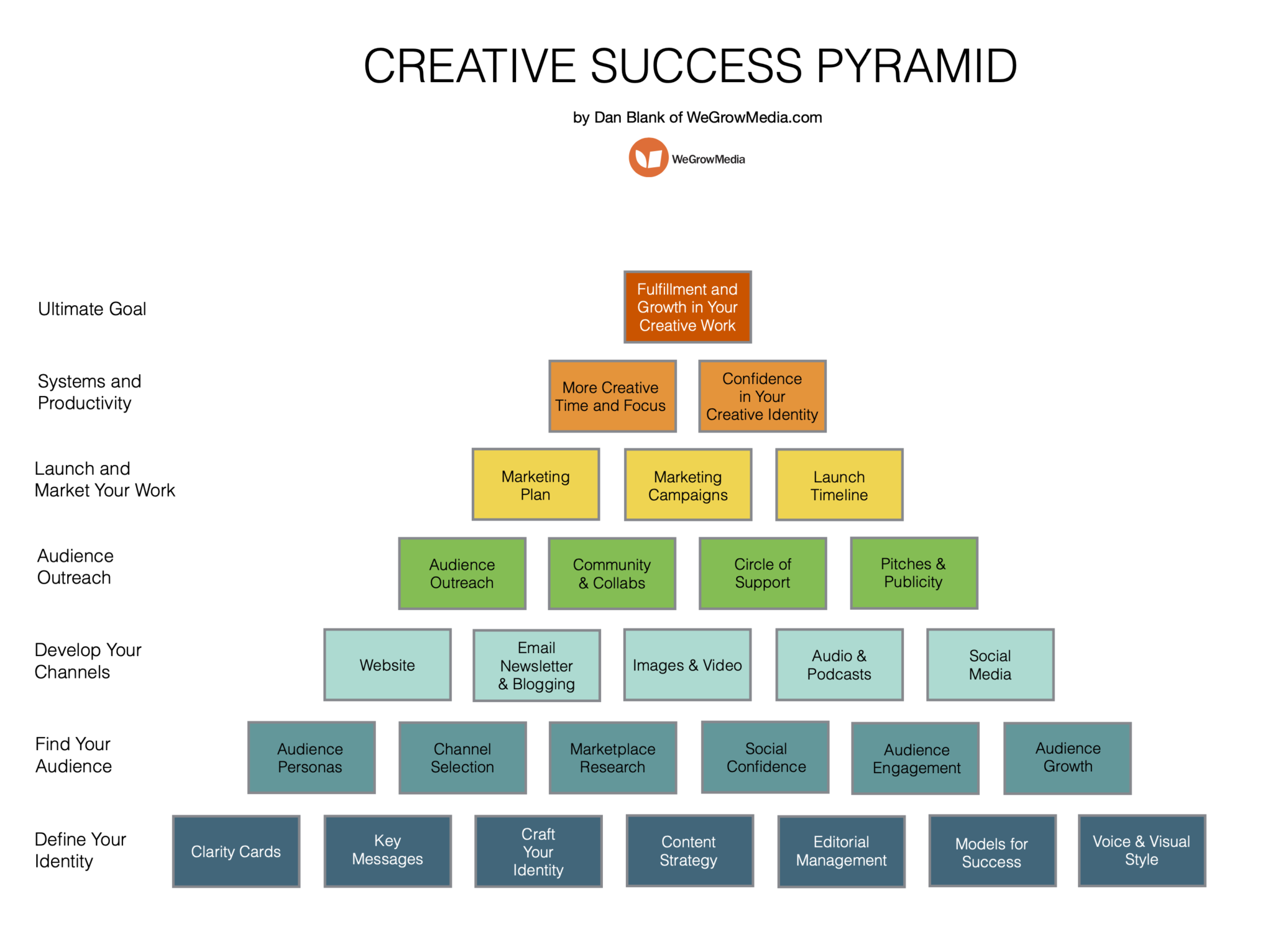
For this case study, I am going to feature Duke professor Aaron Dinin, who also has a book coming out next March about failure. (If you like that topic, definitely read Jessica Lahey’s book while you wait for Aaron’s: The Gift of Failure.)
Why focus on Aaron in this case study? He is a fascinating example of someone who practiced the craft of how to share, and not just how that lead to a book deal, but how it allowed him to slowly hone his messaging, how he shares, and learns what engages people not just in the classroom, but outside of it. That has earned him nearly a million followers on Instagram.
As a marketplace research case study, when I see his videos, I obsess about the decisions he makes, the limitations he is working within, and how he has not just created metrics (views on social media), but very human connections with his followers.
My tips below are meant to give you a way in to consider how you might begin approaching sharing video online for your own platform as a writer.
Let’s dig in…
Do One Thing Well
You don’t have to wake up every day and suddenly be charismatic in videos you post to social media. You also don’t need to be aware of every trend, and be constantly working to game the algorithm. Aaron seems to have two primary content types that he repeats again and again. The first is him talking to the camera. The second is interviewing students in his classes:
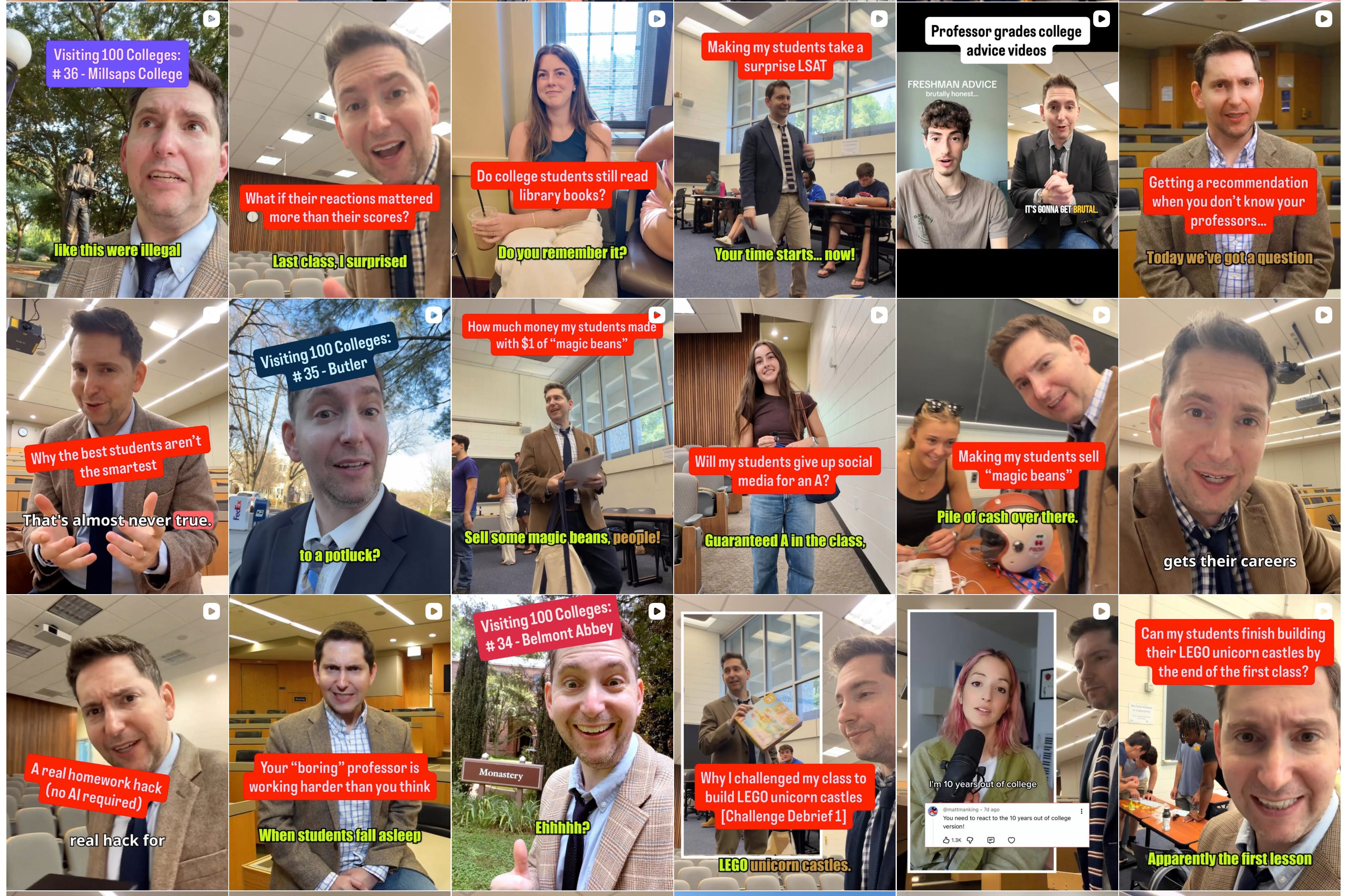
Is there more to it than that? Of course. My point is: you don’t have to be doing something that is constantly new and unique. You can find a style that works for you, and stick to it.
You may also notice that all the cover images for each video above are basically the same, which includes:
A photo of him or a student.
White text over a red background that acts as the enticing headline.
He doesn’t even strip away the yellow transcript text. I love this — how you don’t have to optimize every tiny aspect.
What this should encourage for your own videos: have a simple structure, template, or framework that you can repeat. You can ignore the current trends, and the long list of things you are told you “have to do” to grow an audience. Do one or two things well, and keep repeating them. This is why I always talk about sharing as a craft. This doesn’t have to feel like you are on hamster wheel that only goes faster. You can develop a process that feels authentic and manageable for you.
Use What You Have (and Who You Are)
Use what you have access to. For Aaron, he has access to his classroom and university facilities. He is a professor at Duke, after all. Now, I actually want to pause here for a moment. It’s easy to look at Aaron’s Instagram page and think, “Well, of course he is successful. He’s a full-time professor at a leading university!”
But there are literally hundreds of thousands of people in the U.S. that have similar roles, and that is just counting full-time faculty. There are hundreds of thousands of additional part-time faculty too.
What he also has access to are his students, which you will see below are often featured in his videos. So I can see someone reading this say, “He has a whole cast of characters that I don’t have access to.” Yet, look at this elementary school teacher with nearly 200,000 followers, who does near daily videos that never features a student. Does she discuss goings on from the classroom or student reactions? Yes, but in a general way. She is always alone in her videos, or would only feature colleagues or friends who are adults.
Aaron clearly also has access to his course material and lesson plans, which he can then translate to video content. Since he teaches classes, he has access to many “live events” each week that he can pull ideas or stories from.
I remember years ago when Casey Neistat did this with his videos — he lives in New York City and used the city itself as a set for his videos. Like this one.

Do you know how many other people live in NYC? 8 million! It would have been easy back in 2016 to say, “So I live in NYC with 8 million other people, there would be nothing special about me filming videos in the streets.” But Casey turned the camera onto the city itself every day with his videos in a unique manner back then. He amassed a huge following in the process.
Consider: what do you have access to that is special, or that you can frame in a compelling way — even if seemingly ordinary? Things you may dismiss as commonplace. One of my favorite examples is this person on YouTube who has 600,000 subscribers, and the only thing he shares is videos of him preparing meals at McDonalds. Why is that interesting? Because billions of people eat there, but very few know how the internal system works. McDonalds employs somewhere between 500,000 to a million people in the US at its stores. Any one of them could justify, “My day is nothing special.” Yet this one guy realized his perspective is may engage people.
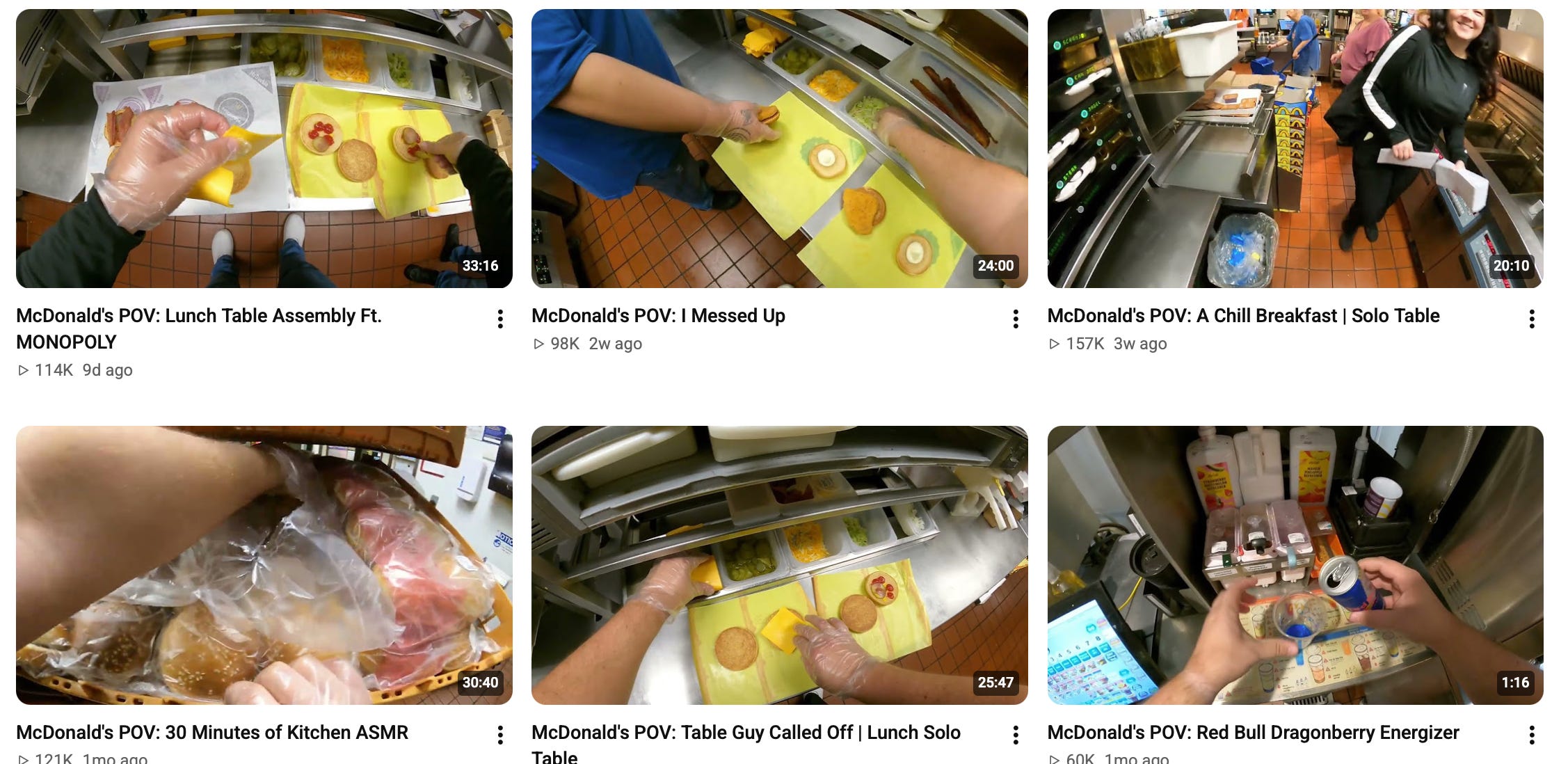
Many writers often feel they need to be sharing things that are unique and special on social media, so they feel lots of pressure, and end up sharing less often. But what I find is that when you share things that are relatable, you can deeply engage readers. Maybe you work part-time at a florist, or write for an hour day day, or live near a botanical garden, or deal with 30-minute drop-offs with your kids at school — these are all things that can feel “common,” or they can be made to feel engaging and extraordinary depending on how you share about them.
A great example is Christine Tyler Hill’s zine, Cloud Report. She works as a crossing guard in Vermont. This is how it is described:
“Christine has been documenting the scenes and sights at her intersection since 2023. She started sharing her observations on social media, and was stunned by how quickly people became invested in her reporting on pretty clouds, funny trash, and dogs in coats… Being a crossing guard is Christine’s daily practice in being present and paying attention. Illustrating and designing The Cloud Report has given her a more structured, playful creative practice that connects her with people around the world about the big and little things that make us human.”
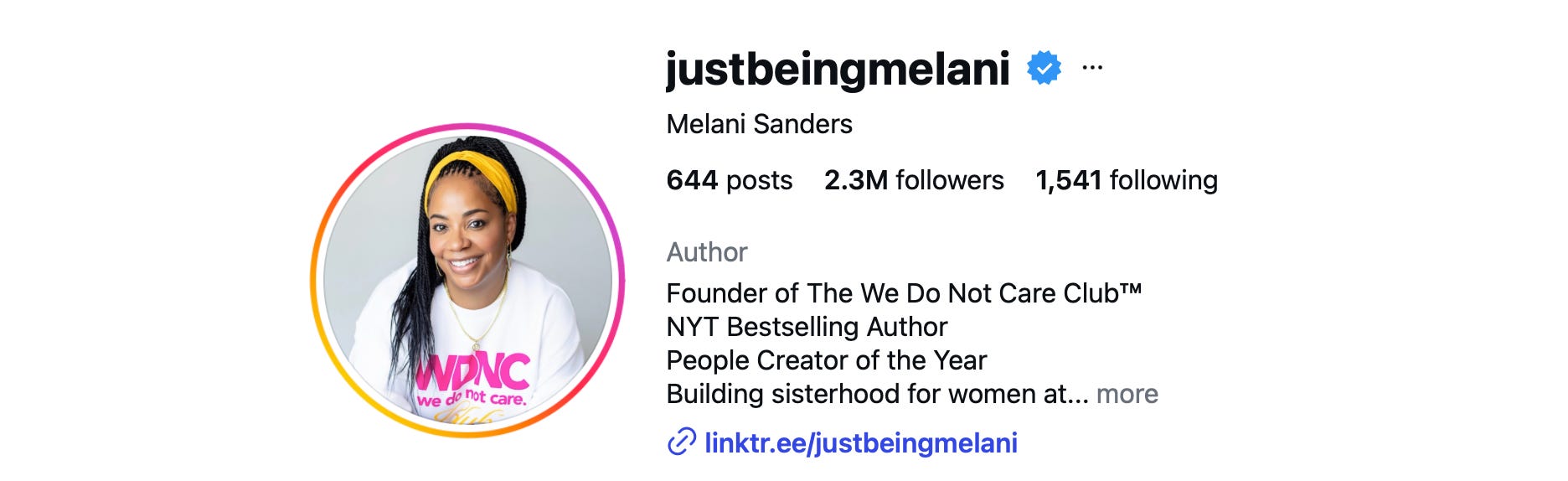
I’ve written before about Melani Sanders’ viral video that lead to her writing a New York Times bestselling book.

When I looked back on her feed, I saw hundreds of posts with her trying different ideas, honing her voice and craft along the way. This honest moment in her car in May 2025, where she is literally making up the name and acronym for her new club on the spot, went viral. It’s now her entire brand. Just look at her current Instagram profile, her sweatshirt as the acronym on it, she defines herself first as the founder of the club, and we can also see her 2+ million followers.
What would your videos be about? Well, many of Aaron’s videos address common questions that come up, or advice he would give from his very particular place in the universe. For instance: What to talk to your professor about in office hours. This applies to any student, anywhere. Or, why is there such thing as “required classes” in college, and how might they change your life? Or a simple 3-minute hack to remember lectures better.
Some of these questions or tips are those I imagine many teachers would overlook. They might seem too common or basic, or maybe they worry they are not the supreme authority to answer them. But Aaron is just sharing his experience and what he recommends, he’s not setting university policy.
Be Playful, Use Suspense and Surprise
This is a signature aspect of many of his videos that involve students. For instance, he may pose a question to them the very moment each of them walks in the door:
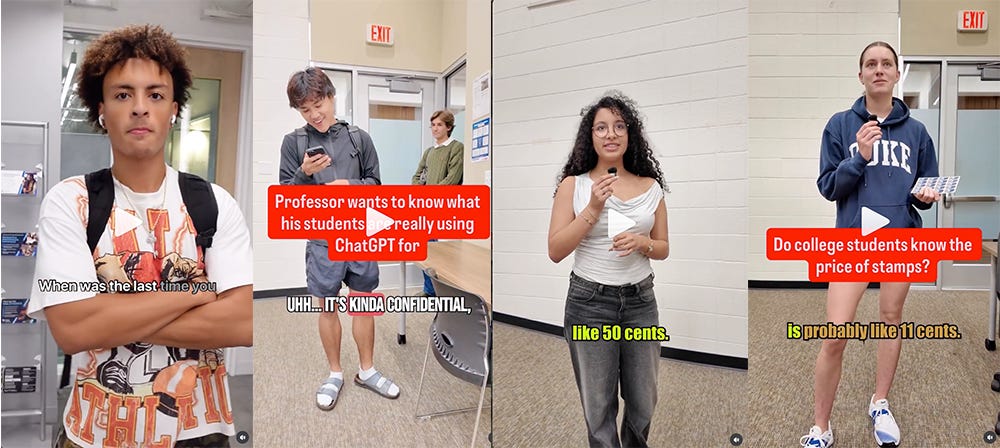
How much do his students think a stamp costs? Don’t you want to know how far off their guesses are? Or he surprise his students by challenging them to complete a 1,000 piece jigsaw puzzle in an hour, with some interesting rules. Or, asking them to take the SAT test during class, as a surprise. Then doing it again the next class. Or asking when students think is the right age to give his child a phone. (Aren’t you curious what these students say? Their answers may surprise you!)
A Plan Can Make Things Less Stressful
The word “authenticity” has become so trendy the past 10 years. Some people worry that if something in a video isn’t 100% in the moment, it may not be “authentic.” We may resist planning for this reason, or simply because planning feels like yet one more thing to manage.
But a simple plan for your videos can make the entire process less stressful. I consider this as I look at Aaron’s videos:
He seems to be using scripts for many of them. Perhaps he does multiple takes, I’m not sure. But each video begins with a clear purpose, he’s never searching for words, and each has a clear narrative arc.
He edits his videos, removing the pressure to have everything perfect in one take.
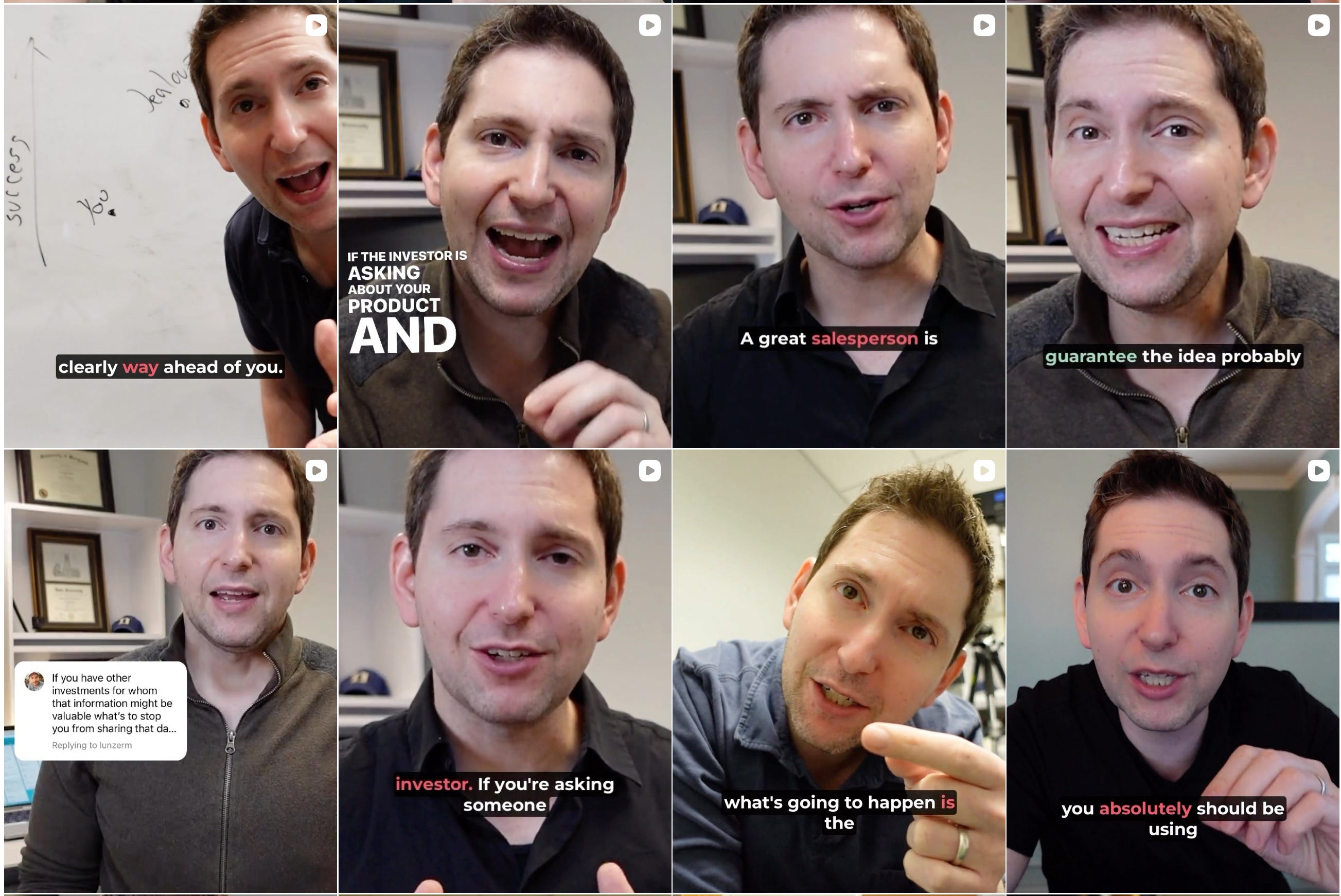
To me, he seems to have a certain “voice” he has craft for how he speaks in videos. Compare these two videos, a couple years apart: 2026, 2025, 2024, and 2023. I feel like I hear a difference. Not good or bad, just a honing and intention.
Some of his videos are clearly aligned to an existing lesson in his classs, but other times not. For instance, in this one, he creates a video around a planned museum excursion with his students.
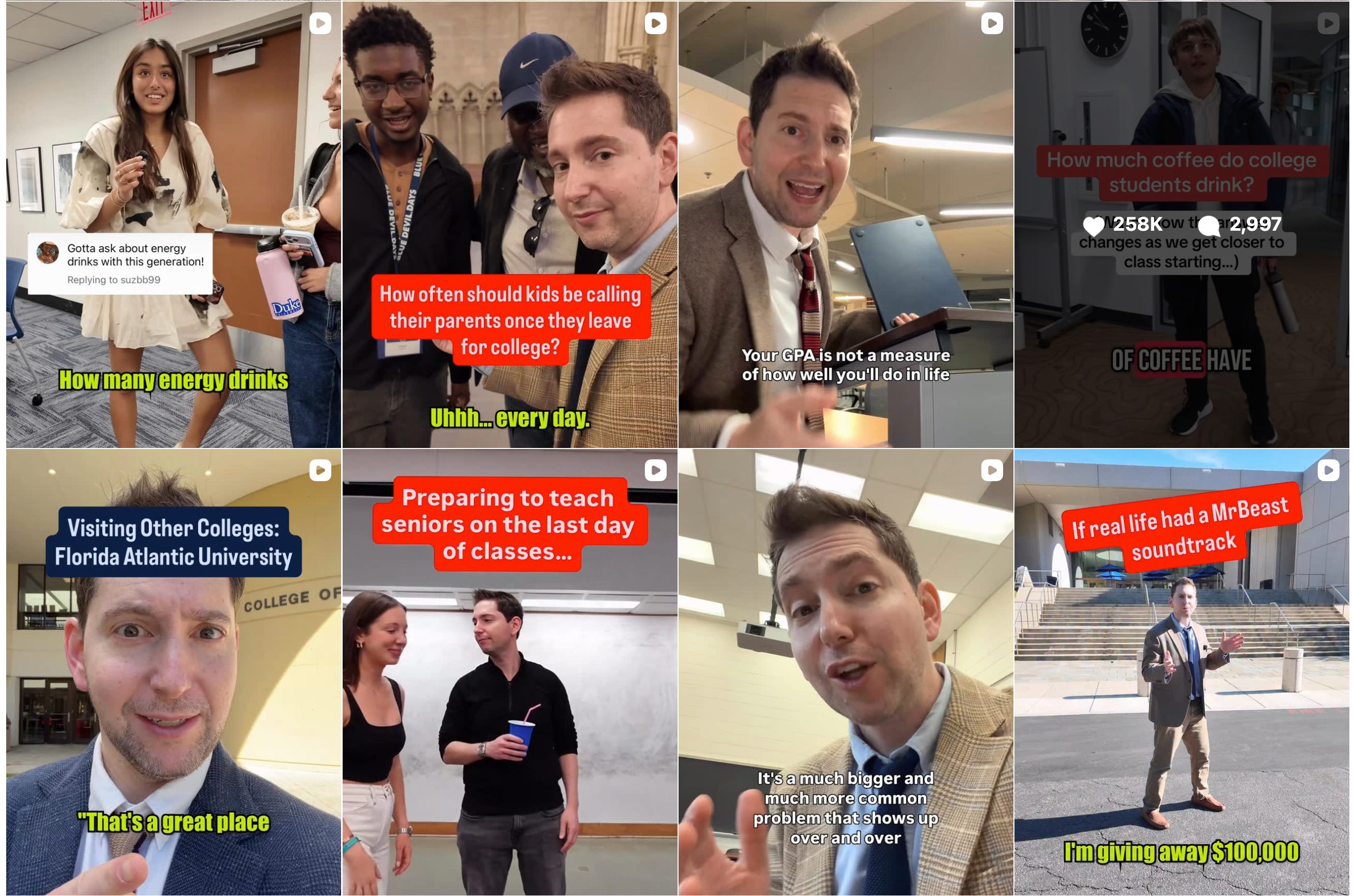
And this may be silly to notice, but I feel like his outfits have gotten more traditionally “professorial,” with his current videos featuring a tweed-like jacket, and unstructured ties, whereas his videos from 2023 were more casual wear. Is this intentional for the videos or for some other reasons? Does it matter? I don’t know, but I noticed it. Here he is in 2023:
And in 2026:
Let it Evolve
It’s common for a writer to try something once in how they share online, then report back to me, “It didn’t work — it didn’t really engage many people, what did I do wrong?” I encourage them (and you!) to let it evolve. Give it time, experiment, develop your voice and craft, and see what feels right to you.
Even for Aaron, this is true. Why does one video get hundreds of thousands of views, then a video a couple weeks later gets 5,000? We can analyze each for an hour, and still may not know. And it’s useful to remember that even for someone with nearly a million followers who regularly has viral videos, performance varies.
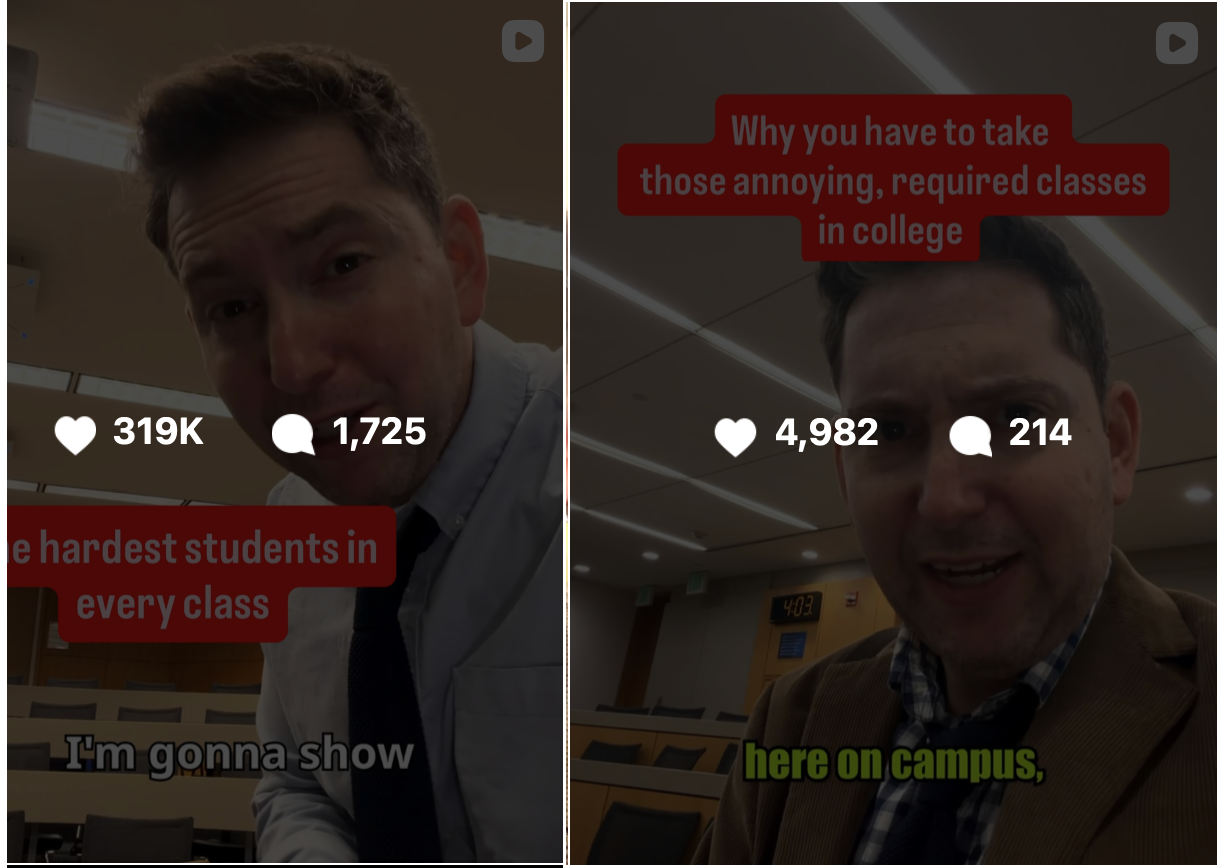
And this is always fascinating to me, I scrolled all the way down to see his very first post. Even today, it only has 6 likes and 2 comments:
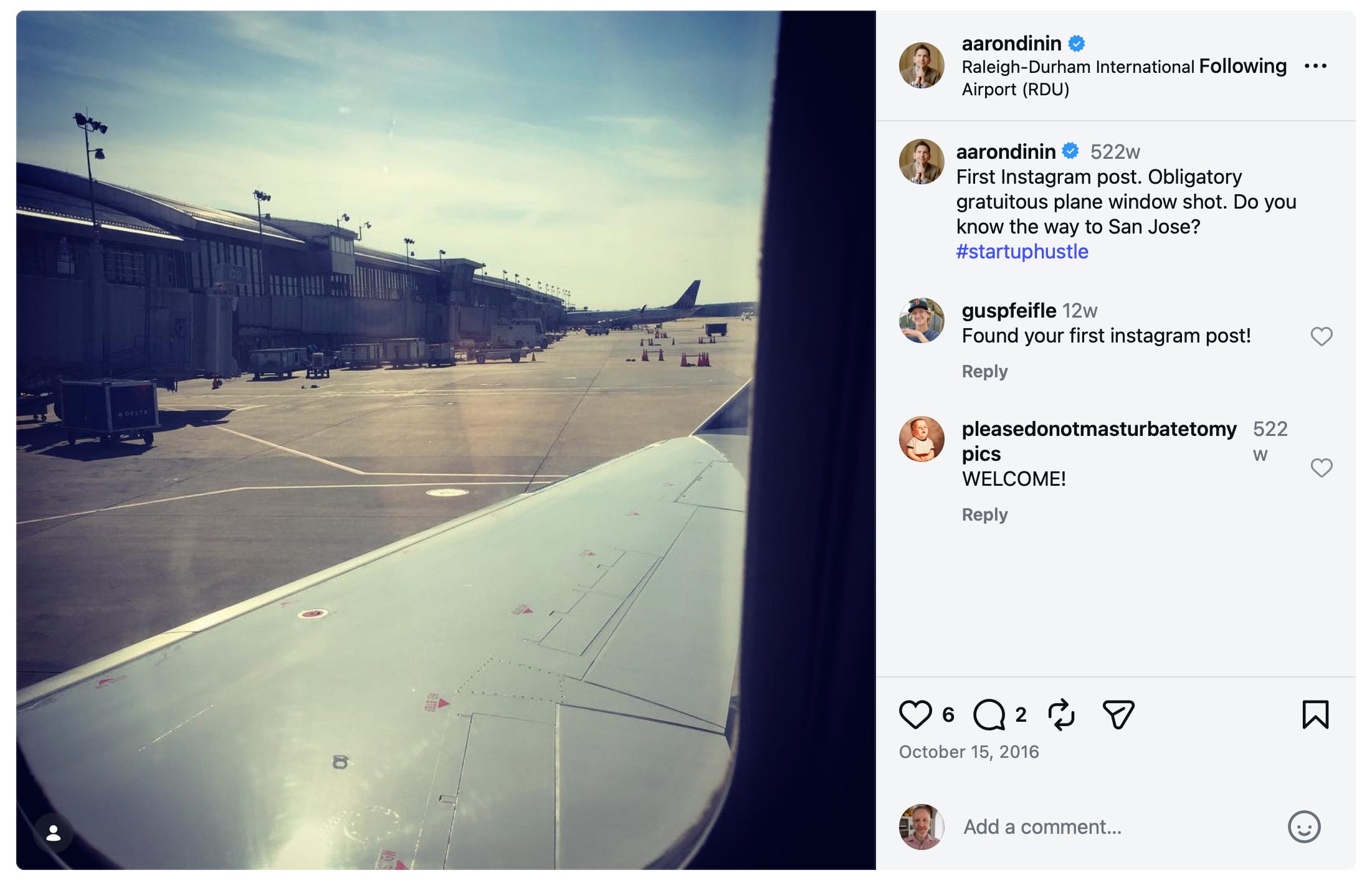
If your first post gets 6 likes, would you conclude, “I’m on my way to a million followers — wahoo!”?
I’ll end with this, and make it personal so that it doesn’t feel judgmental: sometimes we don’t try video, don’t share photos, don’t show up online because we worry about how we come off to others. So, speaking only for myself:
I grew up with a lisp and was taken out of class in elementary school three times a week for speech lessons to try to remove the lisp. For years. I actually have no idea how my S’s sound now, and I truly don’t care. I record 5 videos per week for my Mastermind group, 1 for my paid Substack, and others for clients and social media.
It would be easy for me to worry how I look, and justify: “I don’t want to do video, I hear it simply doesn’t work. I’m a writer after all.” But deep down, the real reason I’m avoiding it may be because I’m self-conscious that I have a crooked tooth in front, a receding hairline, and ever growing bald spot, a weird mark on my cheek — common things we may notice about ourselves, but that no one else really cares about. But stuff like that can stop someone from being open to sharing, and they may never even voice that this is the reason why.
I used to be terrified of public speaking, and had this entire hourlong ritual before going on stage for dealing with my anxiety. If there is a world record for how many times someone can run to the bathroom in an hour, I think I earned it. But, after awhile, the fear just went away. I literally remember the very moment I recognized this before going on to speak in front of 100 people. I was like, “OMG. Not only am I not nervous, I’m looking forward to this. What is happening?!” The same can apply to video or photos. With repetition comes familiarity, comfort, and craft.
Do you have to share video online? Nope! But I encourage you to consider if it could be an intriguing way to develop human-centered connections with your ideal readers, colleagues, and those who may find it a lovely way to learn about your writing.
If you want to explore working with me, there are two ways I collaborate with writers and creators:
My Creative Shift Mastermind group (next session begins January 2027)
Recent videos available to my paid Substack subscribers:
Overcoming the internal blocks that keep writers from reaching readers (19 minutes)
6 insights on a career in writing and publishing (18 minutes)
Feel good about focus: Thoughts on attending to the creative work that matters most to you (17 minutes)
As always, thank you so much for being here with me.
-Dan
Kids of the Week: He finished the “book” he has been writing, a five-page story he spent two weeks on. He is soooooooo proud.
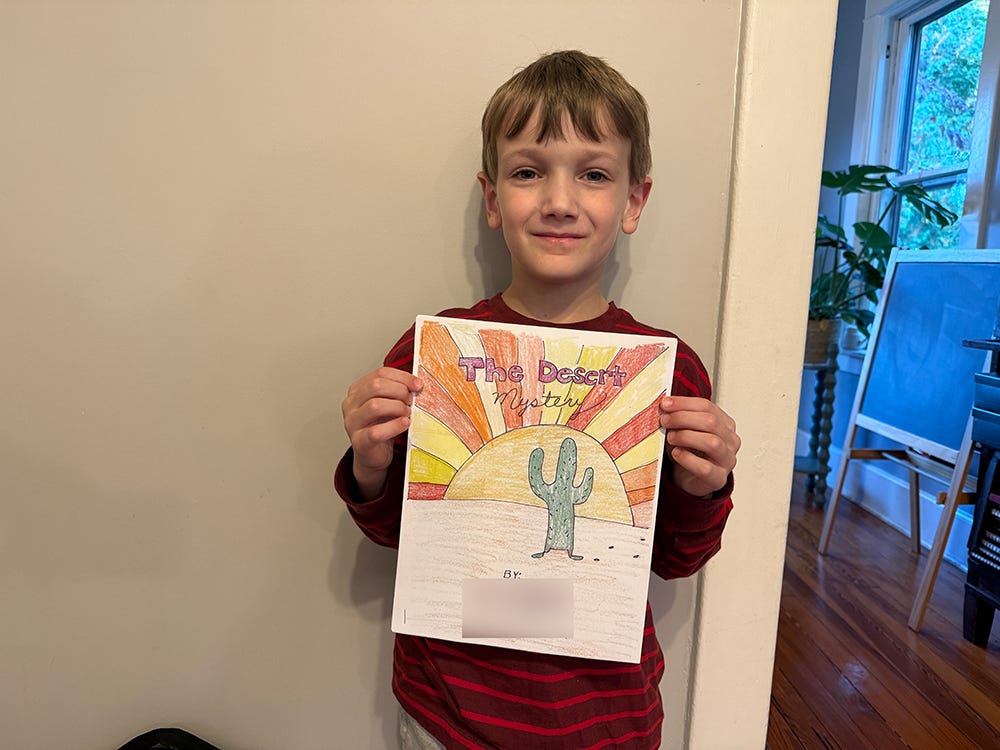
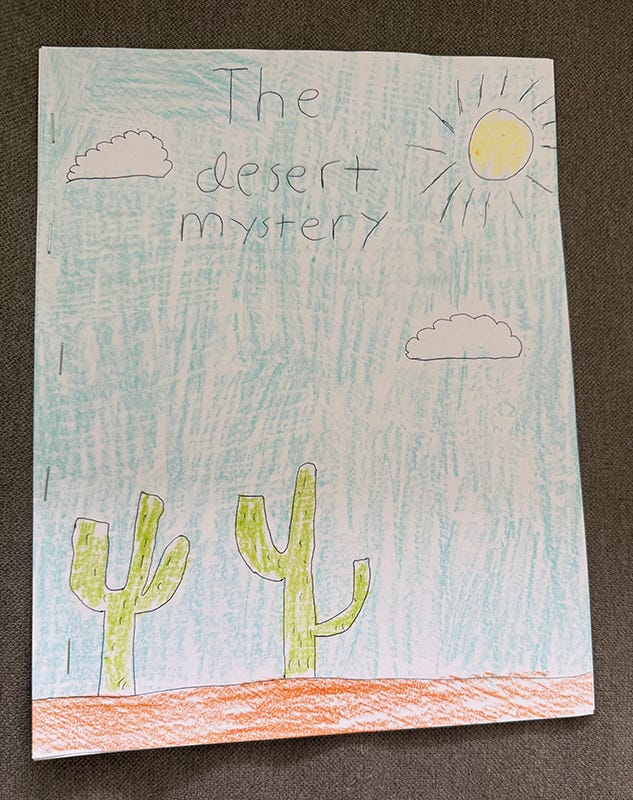
He had my wife draw the final cover above. Here is his original:
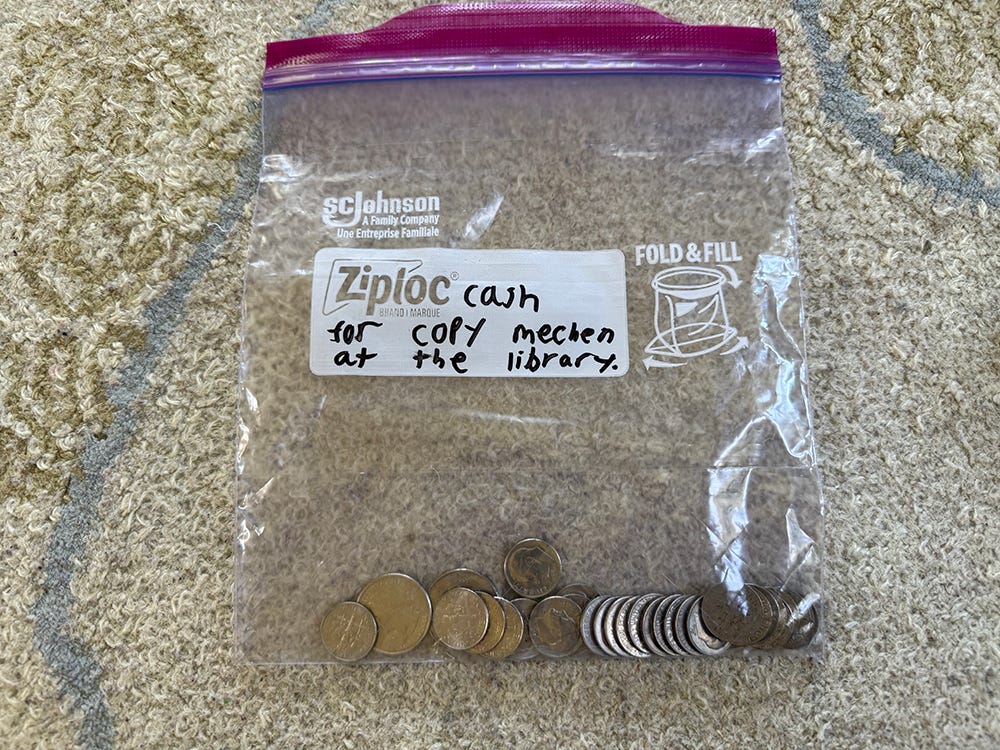
I explained to him how publishing works, including self-publishing. It seemed complicated to him, so when he earned the library had a color copy machine, that became his path to publication. I found this bag in the living room: his money for the copy machine to print more copies of his book:
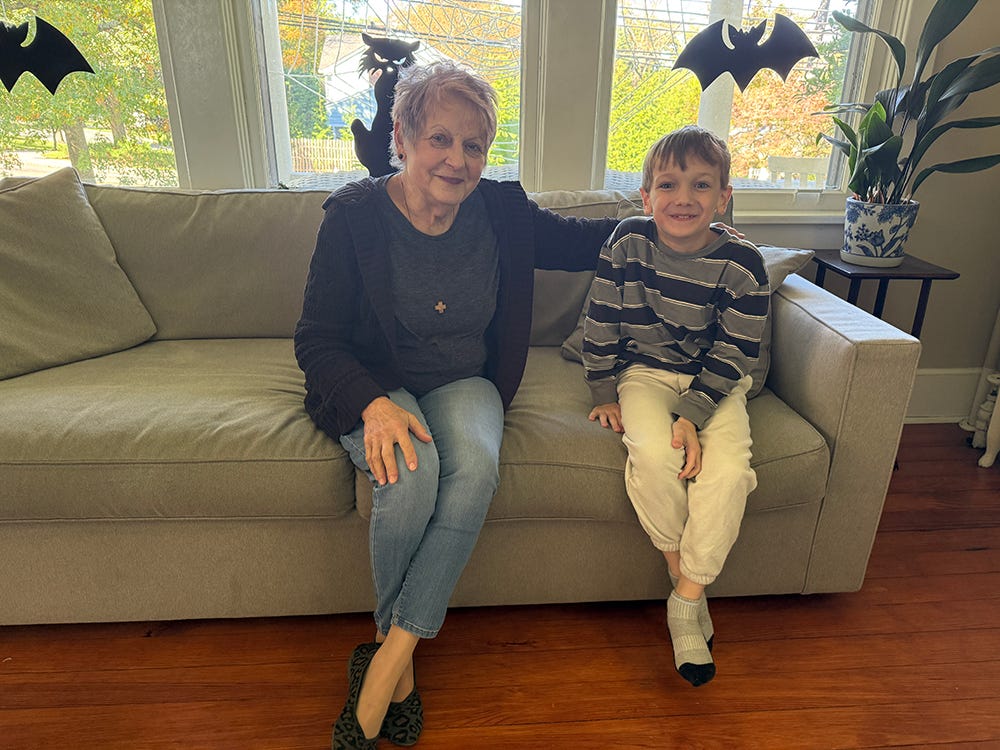
A visit with grandma:
This is a great read. I feel like my confidence with video is up and down, but this was helpful.
I'm pretty good with the socials but this advice I will study in detail. It will help hone what I already do (Insta, FB, YouTube, LinkedIn, Substack). I'm confident talking to camera, no issues there. But there's so much more I can do. Thank you Dan.