
Fall back in love with Substack
A fresh start, filled with writers and readers who inspire you

As a platform matures and becomes more familiar, it can feel less exciting. This happens with individual social networks, and for some, has happened with Substack. It’s like when a “hot new” restaurant in town slowly becomes “just another” restaurant option of many. At first, everyone seems to be talking about it, and just by showing up there, it gives us a new layer to our identity. “Oh, you haven’t been?! You must go! Let me tell you my favorites on the menu…”
For Substack, maybe you feel some of these things:
It feels a bit less like a “quick fix” to find writers and readers, than it once did.
People were always talking about it a couple years ago, it felt like you had finally found “the place” to be. But now that talk has quieted, and some have moved on.
What at first felt like a place where bold new voices were popping up every week, you are now seeing more established players getting more of the attention.
When you started here, it felt like the smallest action you took provided a sense of forward momentum in reaching readers. But now that doesn’t happen as often, and it is feeling like work.
You subscribed to so many wonderful Substack Publications, but now feel overwhelmed by them all.
Your own routines and aspirations around writing and publishing here have hit natural ebbs and flows. You post less, and wonder if you should bother at all.
You’ve noticed some people leaving Substack, and have wondered, “Should I hang out here anymore?”
You’ve become curious about other newer platforms, wondering if that is the cool new place.
What felt like you finally found your one thriving community of writers and readers, now feels like one of five places you need to check each week.
Maybe you have felt all of these things, or maybe you’ve felt none of them. But this happens to all platforms. Today I want to share advice on how you can fall back in love with Substack again, with the following goals:
To fill your days with writing that inspires you.
To fill your weeks with writers who make you feel a part of a wonderful creative community.
To provide a strong center to how you share your own writing and creative vision online, a place that feels less controlled by trendy algorithms, and more focused on meaningful relationships with readers, centered on writing, stories, and ideas.
I still think Substack has done something very special that I haven’t seen other platforms do in the same way. Are there alternatives? Of course, and I’m always thankful for that.
This is not about the platform alone, it is about filling our lives with writing, creators, and readers. About engaging with people whose work you appreciate, and who would be a community you want to be a part of. It is about going deep with the people who inspire you, instead of getting lost in the algorithm.
Before we begin: I just opened the doors to my next Creative Shift Mastermind group, which begins on July 6, 2026. Spend three months with me and a small group of writers as we clarify who you are as a writer, what you create, and how to confidently share your work with the readers who will love it. Full information and reserve your spot here.
Let’s dig in…
Step #1: Do a Clean Sweep
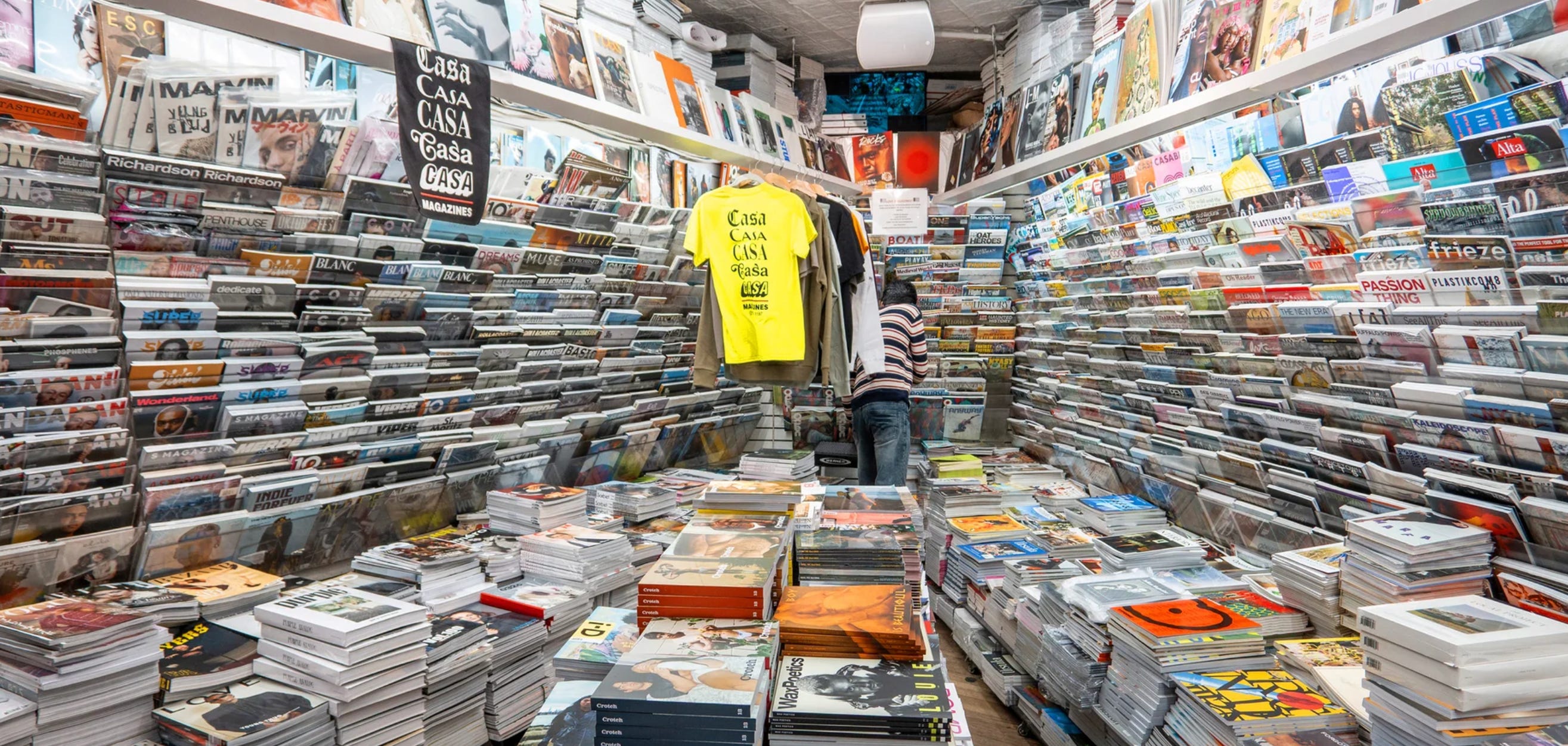
If you look at Substack via the app, online, or through subscriptions coming into your email inbox, it is easy to feel overwhelmed. There are so many essays and writers, and likely so many that you have already subscribed to over the past couple years. It’s like going to a magazine store in 1995, being confronted with hundreds of publications, and walking away empty-handed. It was simply too much choice.
If this is the case for you, I encourage you to do a refresh. Below is the extreme version, so of course dial it less extreme if you need to. My suggestion:
Copy down the name and link to each Substack publication you subscribe to. This is a backup copy, just so you remember them. I tend to do this in a spreadsheet.
Then, and this is where we get extreme: unsubscribe to every single one you subscribe to. All of them, unless you pay for them and doing so creates some kind of billing problem.
Yikes. That’s dramatic, right? I encourage this because I find that it is so difficult to slowly pare back subscriptions. When you have to selectively choose who to unsubscribe to, it can feel personal, and thus: emotionally arduous.
This is a process I have used with cleaning and organizing in the past, and was inspired by the old TLC TV show, Clean Sweep. Their goal was to help people feel less overwhelmed in their homes, so they can live the life they want.
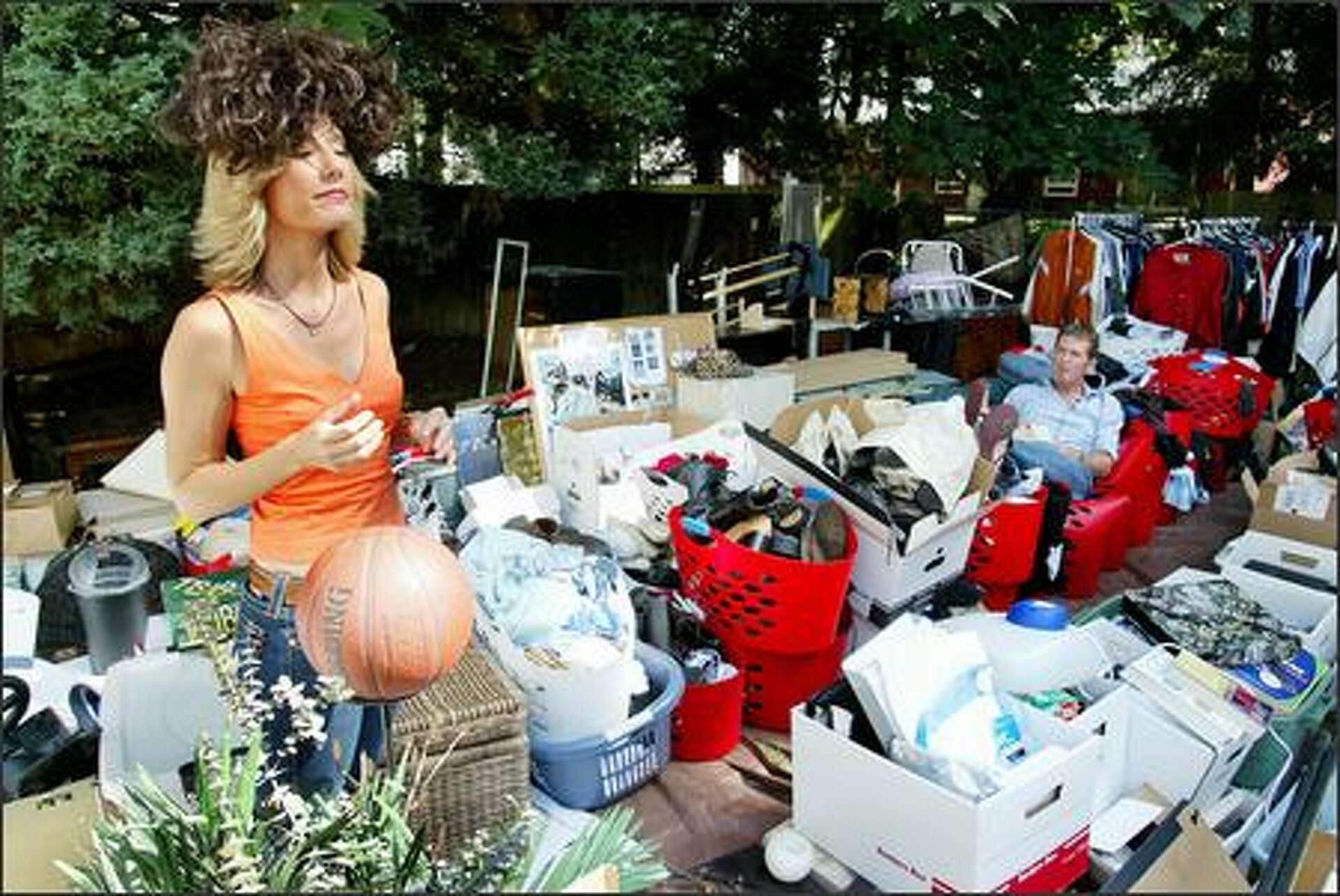
The Clean Sweep team would choose a room, then move all of the contents onto the front lawn. Organizer Peter Walsh would then help the homeowner sort through the often deep emotional dilemmas about letting go of possessions that signified memories or versions of themselves they were “saving” for another day. Here is Peter and one of the hosts midway through the process:
My dad called this “zero-based cleaning.” To start fresh, then just add back in what you want to keep. What didn’t make the cut would be the possessions you would sell or donate.
I suppose this is the opposite of an “edit,” which is a word I see used in the fashion world to carefully cull your wardrobe in order to curate certain looks. Here we aren’t carefully pruning, we are wiping away, beginning with an empty closet.
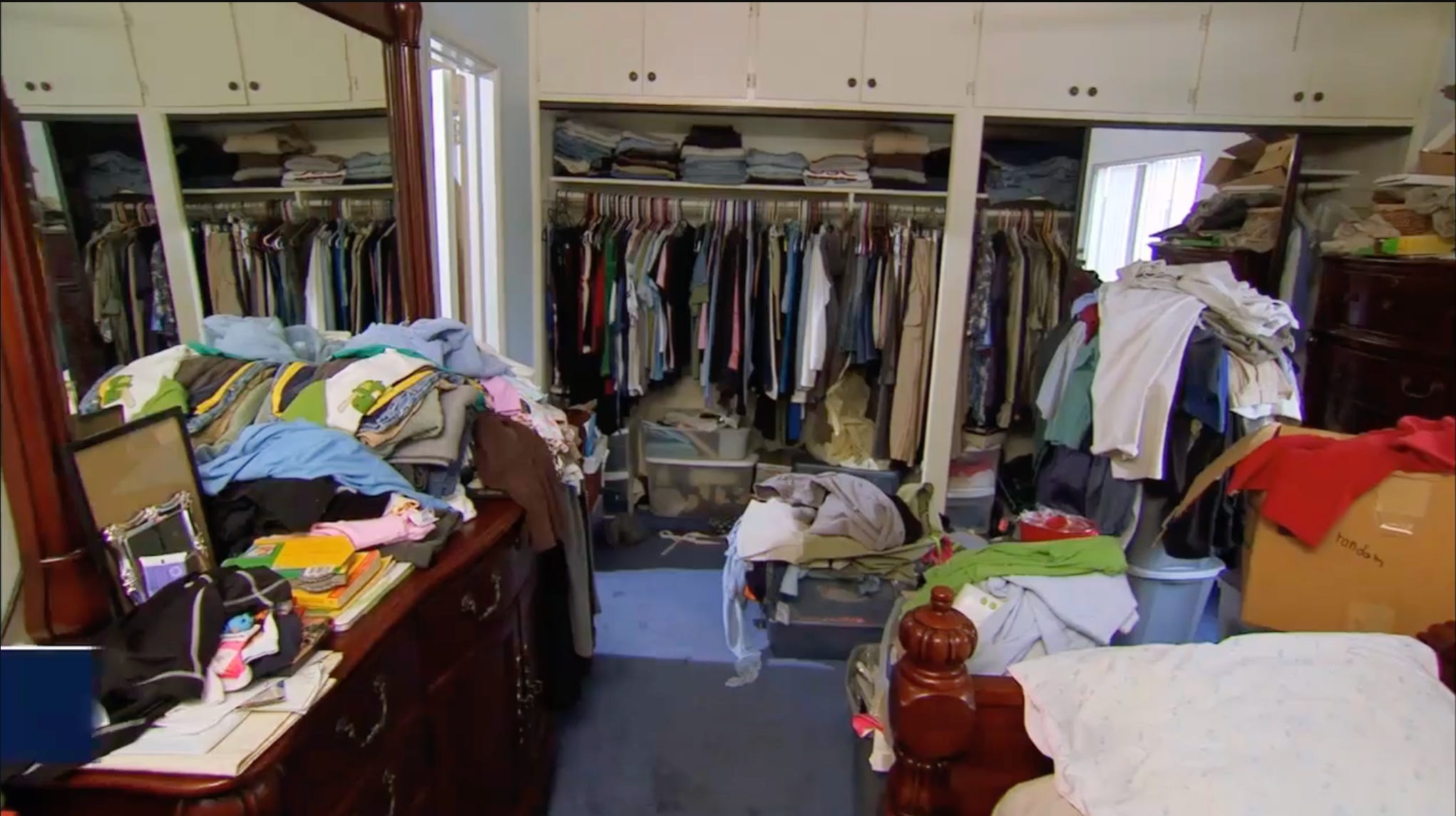
Clean Sweep often had people crying as they confronted deeper issues around the objects they were holding onto. I think the fact this was all done on their front lawn allowed people to own up to things previously hidden. I miss this show. Peter Walsh did his own program a few years later, called Enough Already! Here is one room a woman is overwhelmed by:
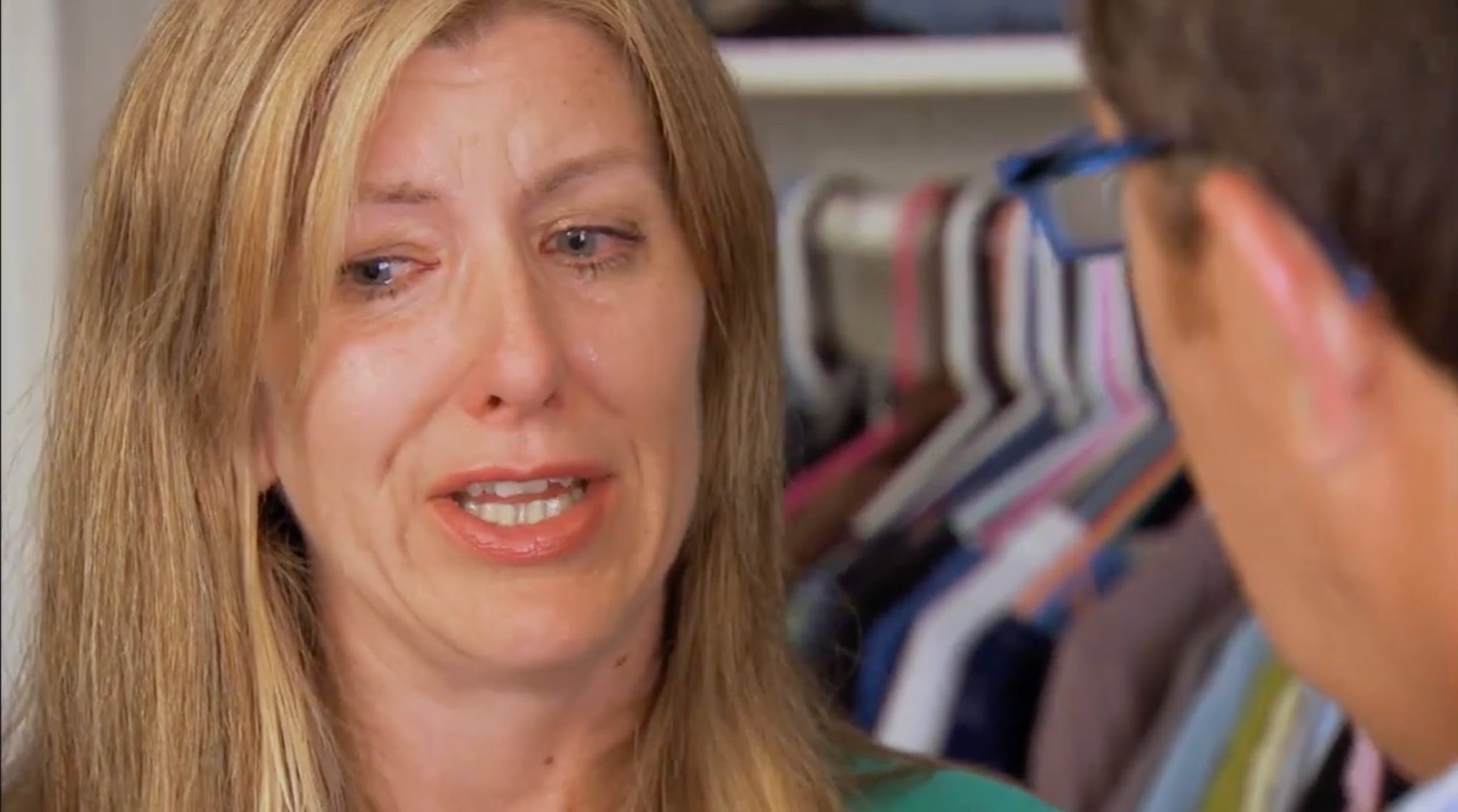
And her crying as she discusses with Peter how she collected so much, and the life she really wants to live instead:
Each person may have their own version of this situation. Someone whose closet is mostly taken up by a huge guitar amplifier they haven’t touched in 20 years, which represented their dream to become a rock star. While they don’t pursue that dream anymore, it was emotional to let go of an object that represents this childhood dream, even if it was standing in the way of their current goals.
Each Clean Sweep episode would end with the homeowner being welcomed back into a newly designed room that suits the daily life they want to live right now. They are being given permission to be who they are, and to focus on the world around them without obligation. That is what I’m hoping this Substack refresh can do for you as well.
Along the way, this allows you to confront those you subscribe to simply because you feel you “should.” Maybe the person is well-known and you feel you “have to” follow them. Or they follow you, so you want to reciprocate. Or they “generally seem successful like the way I want to be,” but you don’t really read them. There could be dozens of people you subscribe to with similar reasons. You barely read them, but feel social pressure to keep subscribing, unable to let go.
In a similar vein, don’t feel you have to subscribe to certain Substack publications to keep up on “news” and “trends.” It’s exhausting. Be okay with being out of the know.
I’d also encourage you to get rid of what I will refer to as “envy follows” or “trigger follows.” Those you subscribe to because, while you admire their success, you are envious of them. Something about them (including their success) triggers you in a negative way. It could be someone who you once felt was a colleauge who started out the same time you did, but has since skyrocketed to success. And as much as you are happy for them, it triggers envy in you, because you feel stuck in the same place you have always been.
Opening up your Substack feed should give you with a sense of fulfillment, however you define that. If someone you subscribe to doesn’t’ allow for that, just let them go.
Step #2: Start Fresh and Curate Your Subscriptions
Pick 10 Substack publications to re-subscribe to. Just ten. Live with them for a week or two, and see how different that feels.
You can use any criteria you want to select them, but I would encourage you to choose those which inspire you in some manner. Where, when you open your feed, you want to read all of the new posts.
In the backup you created of the entire list of publications you used to subscribe to, remove these from that list. Then, go to your calendar and put a reminder for a week or two out, to consider re-subscribing to 5 or 10 more Substacks. Do this slowly, over the course of a month or two.
Could you put a max number on subscriptions, like 30 or 50 or 80? Sure. In that case, you can use a decluttering tool that many use of, ‘one in, one out.’ So if you subscribe to a maximum of 30 Substack publications, then in order to add a new one, you have to unsubscribe from another.
This is not meant to become a rigid process, but instead to give you agency to optimize Substack for the experience that fills you up inside. Where you are intentional about where you spend your time, and you put boundaries that align to your limits of time and attention.
Curate your feed. This is something I have kept in mind as I have embraced my hobby of watching a movie nearly every day this year. I am only using physical media, like DVDs and Blu-ray discs, and have considered growing a library-like collection of them at home. Instead, I am approaching this cautiously, only buying discs that I know I truly love. To have a curated collection where every disc matters to me, rather than trying to amass a huge collection, or be a completionist. This is so freeing, and has be focus more on watching movies than shopping.
The nice aspect of this is that it changes your algorithm on Substack, too, ideally in a positive way. If you subscribe to fewer people, and only those you really love, that tells the algorithm what to show you more of. Which is different than if you subscribe to 200 publications across a wide range of topics that you have never curated.
Step #3: Give the Gift of Caring
The next step is to actually read the people you subscribe to! This does not mean you have to now check Substack constantly. Whether their newsletters come into your email inbox, or you use the Substack app/website, one way to manage this is to simply schedule one to three times per week that you will read these publications. That way, if someone sends you a newsletter in the midst of a busy day, you don’t feel overwhelmed by the pressure to read it.
Then, could you post a comment on at least half of them? To let the author know that you read it, that you cared, and any facet of their writing resonated with you. You can just comment back: “Loved this — thank you!”
Wouldn’t that be great to hear on anything you have published?
But you can also go further. In your comment, post a longer sentence, or a few of them. If you want to stand out to this writer, give them feedback that is greater than a simple “like” on social media. The best gift a writer can receive is simply being read. Don’t rely on data to have them find this out — open rate, or how many likes. Tell them. Show up as a human being who loves reading, and loves supporting writers.
This also makes a huge difference to your life. Instead of subscribing to 200 Publications, reading only 10% of them, and engaging with only a handful every month, usually by clicking the heart icon… what if you did this:
Subscribed to a total of 18 publications.
You looked forward to each of them, and read most of them.
You regularly posted a thoughtful comment, and got a meaningful reply from the writer.
Where your Substack experience isn’t just long list of things vying for your attention, like the endless scroll of TikTok or the news. But where it was a place — a community — you show up to, and engage deeply in ideas and stories with those who inspire you.
I think this may also open up the possibility of you becoming a paid subscriber to some of these publications, since you aren’t drowning in your feed. Are there three of these Substack publications that you can pay for? To get their exclusive offerings, but also help a writer become financially supported via their writing?
Step #4: Share Something Authentic
The last step I will share today for falling back in love with Substack is to show up as the person you are. Share an authentic update on your own Substack. Reintroduce yourself, what you are working on, and where you are in life at the moment. Set boundaries you are comfortable with, but try to share the reality of your goals and struggles. People tend to relate to that.
Perhaps take inspiration from Meera Lee Patel and her Publication, Dear Somebody. Each week she shares, “Five things from this week that I’d like to remember.” That’s it. Five moments from her week. Honest things about lessons, limits, hopes, routines, moments, people, places, and so much else.
Please let me know in the comments if any of this resonates with you. I have sent out an email newsletter every week for more than 20 years. I appreciate Substack because I just love seeing so many writers and readers coming together around stories and ideas, and celebrating how this can become central to our days, and how we connect with each other.
If you want to explore working with me, there are two ways I collaborate with writers and creators:
I just opened the doors to my next Creative Shift Mastermind group, which begins on July 6, 2026. Spend three months with me and a small group of writers as we clarify who you are as a writer, what you create, and how to confidently share your work with the readers who will love it. Full information and reserve your spot here.
Recent videos available to my paid Substack subscribers:
Authenticity and sharing your craft (19 minutes)
You have a creative voice. What will you say? (19 minutes)
Three common mistakes writers make trying to describe their writing (12 minutes)
As always, thank you so much for being here with me.
-Dan
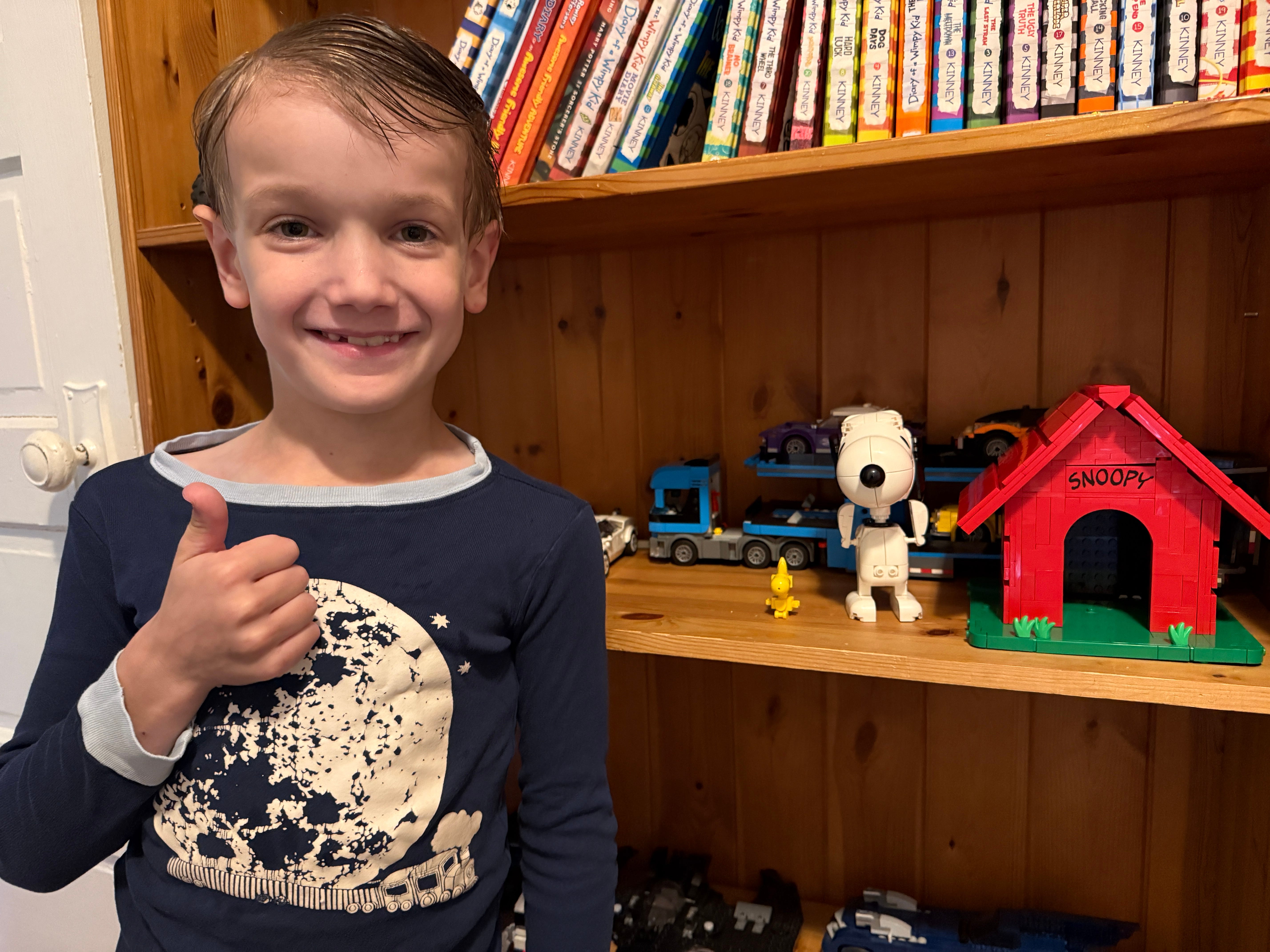
Kids of the Week: with his new Snoopy LEGO set:
So helpful! And I read your Substack every week. Thank you, Dan!
I love decluttering shows! I did a major substack declutter down after my first few months here. My second paring I unsubscribed from news-based newsletters. Two in particular that I absolutely loved, but news/politics/current events became too triggering. My most recent decluttering was based entirely on how I reacted when the newsletter showed up in my email. Some newsletters got an Oh boy,oh boy, so and so posted! If they didn't pass the oh boy! test, I unsubscribed. I felt really guilty, but now I'm down to about 10. And I'm excited to support all 10.