
Fall back in love with sharing
Focus on human connection, not content

I have been helping writers share online for more than a quarter century. In the very early 2000’s, I worked directly with hundreds of journalists and experts to help them understand email newsletters, blogging, social media, and online video. It was not always an easy transition for them. I had magazine editors walk out of meetings, journalists guffaw at the idea of allowing readers to post comments under articles, and other ways of resisting how the internet was changing the way writers connect with readers. I never minded their pushback, because I always knew it came from a place of deep caring about their craft.
At that time, the idea of sharing online was still new, and social media was still considered an oddity to many. But slowly, we each carefully began sharing when it felt safe, fun, or useful.
I remember how strange Facebook felt at first. But then on day, I saw George Veitengruber on it. Who is that? A kid I played soccer with when I was 9 years old. I hadn’t seen him since that era, yet here he was on Facebook! I posted this photo and George commented. My dad is on the right (assistant coach!), and I’m the kid directly in front of him. George is just below me, by my right hand. I forget which year this is, maybe 1981:
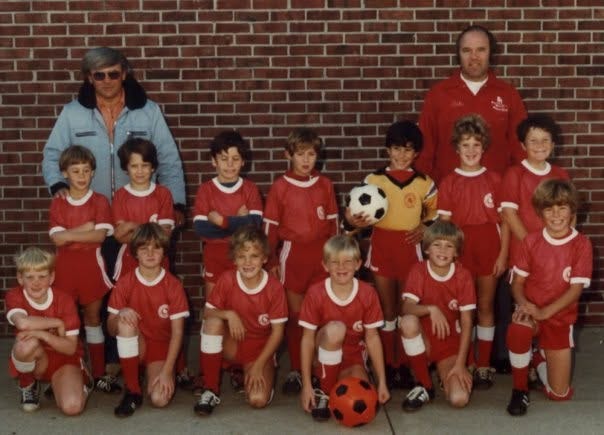
That is when social media truly came to life for me. When it wasn’t a sea of “content” shared by strangers, but a gateway to people and experiences that felt meaningful to me.
Slowly, sharing on social media began connecting me with new people who were exploring the topics I was interested in, who were incredibly inspiring, and who I really admired. In the years since, I have so many true friends that I have met purely because of social media. These are people I text every week, who I share amazing conversations about our lives and the world around us.
How sharing online felt years ago:
Small and contained. Like passing a note in class.
Surprising and human. Little moments of inspiration popped up, and each one felt unexpected and special.
Idiosyncratic. There were fewer norms, and everyone wasn’t copying the same ideas so prolifically.
For many of us, something else happened along the way. Over time I think each of us has developed a deep literacy of online content and social norms. Of not just how to share, but an awareness of the strategies and tactics that others use, such as click-bait. Nowadays, we can analyze our feeds in milliseconds, sussing out what feels authentic and what doesn't. It’s not any different from watching television, and knowing what content is a show, and which is a commercial. We have become sophisticated at understanding intention in how people share online.
And it can be exhausting.
For some, the excitement of sharing online has faded away. It now feels crowded, overwhelming, and like there are more pitfalls than opportunities.
So today I want to talk about how to fall back in love with sharing. Not because you need to create “content.” But rather, because this is a deeply meaningful way to forge human connection around the themes you write about, and connect with readers in a manner that enriches their lives, and yours.
This is part three in a series:
And today: fall back in love with sharing
Let’s dig in…
Why We Resist Sharing
There are so many reasonable reasons why we may resist sharing online:
Fear of saying the wrong thing inadvertently and being called out on it. The public shaming, the guilt at getting something wrong, the fear of offending someone, and even the concern over being canceled.
Fear of having to get everything “right,” and if we don’t, facing even the mildest criticism or judgement in the comments. Sometimes it seems no statement is mild enough to not be criticized in some way by someone. Posting a photo of pretty flowers in your local town square? Someone may reply how it’s a misuse of tax dollars, or how they feel there was collusion in which landscaper won the bid for that job. #flowergate
Fear of grandstanding or looking like you are selfishly seeking attention. This is one people commonly tell me about, and it often goes deep for them, where they explain how they were raised to not unduly seek attention.
Feeling so overwhelmed by what others are sharing, that you feel there is no room for your voice.
Concern that you aren’t technically proficient enough to know how to effectively share online. Or that some other basic characteristic about yourself prevents you — and you alone — from doing what millions of others are.
Fear of failure and being seen as “trying,” and then the things you share not immediately panning out. Sometimes one can feel a sense of shame, like everyone is seeing how no one is engaging with what they shared. That makes it easy to justify it is better to not try at all, than try and look like a “failure.”
Fear of success. It is so much easier to stay where we are comfortable, even if we would adamantly say we want something more. Success might mean we are pushed out of our comfort zones, and have new expectations put on us. And we just aren’t ready for that.
Fear of being seen. This is sometimes aligned to fear of being seen by those we know, who recognize us from different roles in life. For instance, concern of work colleagues learning that you want to write a memoir, and being concerned of how they react. But it can also be aligned to impostor’s syndrome, where we hesitate to say online that we are a writer, because we don’t have an MFA, or some credential that proves a governing body has anointed us a writer. Which, of course, is absurd. You are a writer when you write.
Justifying that it is too early to share if you are primarily doing it to grow a platform for a book you are publishing down the road. In fact, “now” is rarely the right time.
Concluding that nothing works.
Lumping all online sharing with a trend you don’t like. By sitting out, you feel you are illustrating good taste.
Concluding that everything shared online is bots or AI or created by other fickle people who are simply seeking attention.
Concluding that we have to have everything worked out before we share. This may include: knowing exactly our audience, exactly what to share, exactly how it will lead to our specific goals, etc. We keep delaying sharing because there always seems to be just one more piece of information that is missing. To share before we are 100% ready would be wasting resources, or “putting the cart before the horse.”
That you are an introvert, and therefore, you can’t share.
Wow, that’s a lot. And I imagine that some of this may resonate with your experiences. Okay, let’s move into practical actions you can take to fall back in love with sharing…
Step #1: Embrace Being Out of Step
This is the first place to begin. Let go of the entire idea of being in step with everyone else and how they are sharing online, including:
Trends and what is fashionable or stylistically “in.” I know, trends make us feel part of something, but they can also be a treadmill of pressure that never ends.
Best practices. By the time something is a best practice, it is often a copy of a copy of a copy of something that worked awhile ago.
Expectations of results or return on investment.
Scrolling. If you don’t want to be triggered or compare yourself to others, take a break from scrolling, or at least a break from scrolling first, when you open an app.
The algorithm and what we think it wants. Stop editing yourself to fit in to what an algorithm is highlighting or demoting.
Focus instead on what is uniquely to you. Even if you worry it is ordinary, or weird, or boring, or repetitive, or unoriginal, or imperfect. I say this constantly in this newsletter and can’t say it enough: You have a unique creative voice. You are a unique human being from anyone else who has ever lived. What you experience each day is unique to you. Share that.
Step #2: Capture Moments (as a Practice)
When I began my weekly newsletter more than 20 years ago, it changed how I saw the world in very positive way. I saw stories in small moments as I moved through the day. I began capturing anything that stuck with me, even if seemingly random at the time. This became the ingredients for every newsletter I have written since then, well more than 1,000 essays. These are the tools I use to capture ideas throughout the day:
The notes app on my phone
The voice memo feature on my phone
Screenshots (soooo many screenshots of anything that piques an idea)
Taking a photo, even of a web page
Saving it all in a Dropbox folder that I can sort, organize, and search
What this means is that when I do want to share, I have a well of ideas at the ready. By saving these ideas, it removes the feeling that every thought and idea has a timer on it. That I have to share everything the moment I experience it.
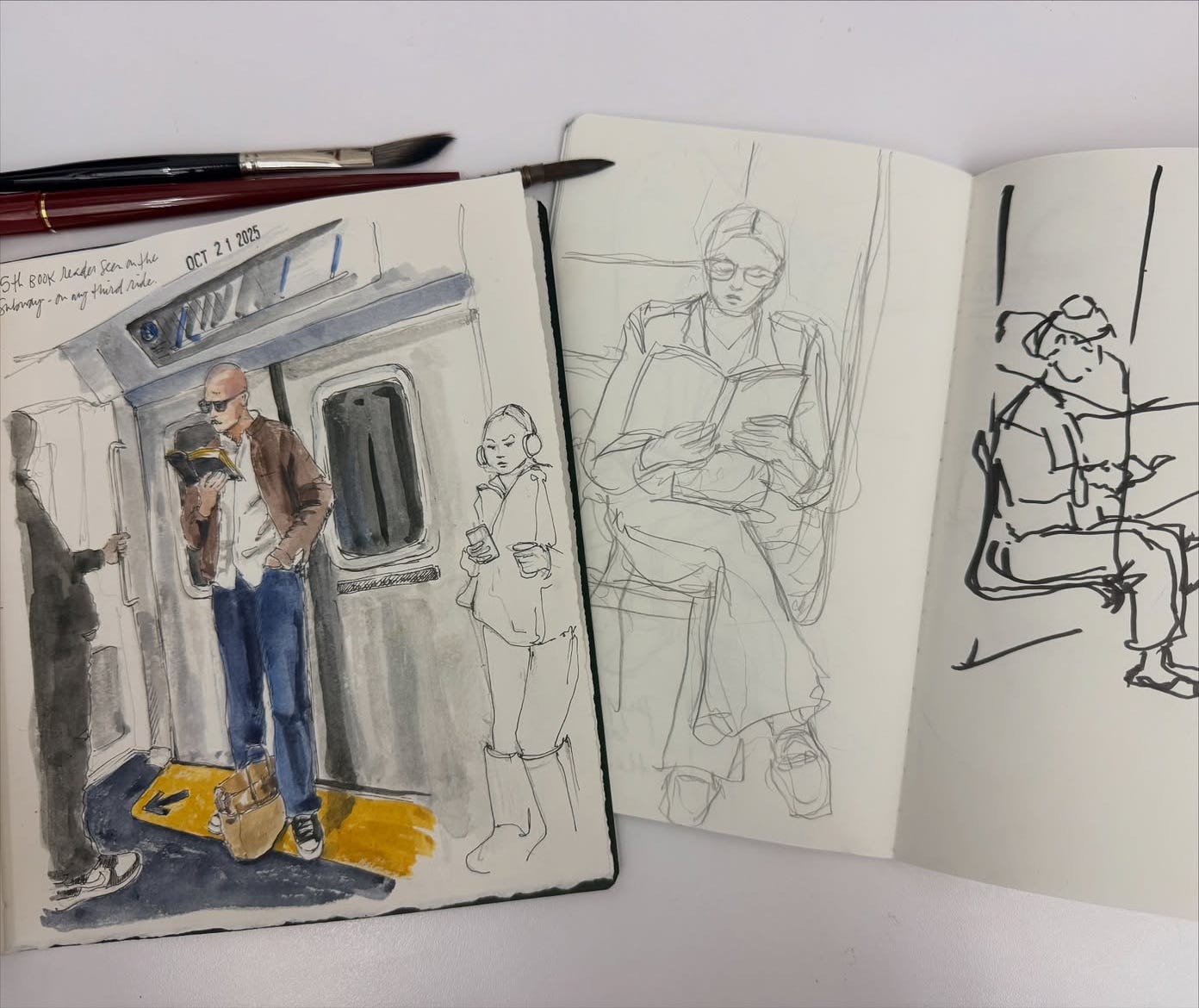
Of course, plenty of people simply carry a small notebook to write ideas down in. Or how my friend Samantha Dion Baker draws what she sees each day in small handmade notebooks:
Step #3: Detach Sharing From the Moment of Experience
Detach the moment of ideation from the moment of sharing. This, more than any other, is a great way to feel more present in your everyday life, and alleviate any sense of pressure you feel in sharing online.
You can post about an experience later, and it will not diminish other people’s perception of it.
How many photos or status updates did I post while on our family vacation to Newport, Rhode Island earlier this summer? Zero. Instead I shared an essay six days later, and some photos to my Facebook friends a full eight days after that. This gave me time to not only experience the trip, but process it.
Detaching time allows us to be more intentional with what we share and why. As opposed to needing the emotional rush of sharing a moment the split second you experience it. This can also take the social pressure out of social media, because you aren’t having to craft a story while you are still in the middle experiencing it.
From the perspective of being a writer, this means I can take in more signals, without being distracted by having to publish one of my own in that same moment.
You can take the time to craft a narrative. This can add layers to your creative practice. To not just share a photo in a moment exclaiming, ‘Look at this pretty thing!’ But instead waiting, and crafting a story about why this matters to you, and the reader.
You can also schedule posts to be published after you create them. This too removes the emotional pressure we may feel when sharing. Clicking “publish” is still an emotional experience, even for me, after doing so every week for decades. It also makes me consider the craft of creating more than the inner need for social validation in that moment.
This also means that you are not only sharing when you feel inspired. Where you feel pressure to monitor your day for something worthy of sharing, otherwise you feel like your life is not as exciting as others you see online. It may even help you share more consistently because you are able to share at intervals that make sense for you.
Step #4: Be Messy
Experiment. Try sharing in different styles, with different emotions, at different times. Share long posts, share short posts. Try narrative storytelling, how-to’s, videos, audio, photo, text, and remixes of them all.
So often, sharing feels limited because people convince themselves that there is “one right way” to do it. But there isn’t.
Don't be afraid to be messy. To start small. To be passionate instead of professional. To be boring. To be eccentric.
Share moments you think no one will care about. Because it will surprise you what does deeply engage people.
Develop your voice as a full and complex human being who doesn’t always have to be “on brand.”
Step #5: Expect Nothing and Honor What You Do Receive
For what you do share, give yourself grace when things flop. When you share something and no one seems to care. Don’t judge the return on investment or the “impact” it had the moment after you share. Don’t keep checking to see how many likes it has received.
Instead, publish what matters to you. Recognize those who comment ore reshare with gratitude. Note what you learn in the process. Move on to the next story you want to share.
If you want to explore working with me, there are two ways I collaborate with writers and creators:
Recent videos available to my paid Substack subscribers:
Sharing what is real in an age of AI-perfection (25 minutes)
Agency Vs. Algorithm: On feeling a sense of purpose in how you connect with others on social media (23 minutes)
What if your writing doesn’t speak for itself? (20 minutes)
As always, thank you so much for being here with me.
-Dan
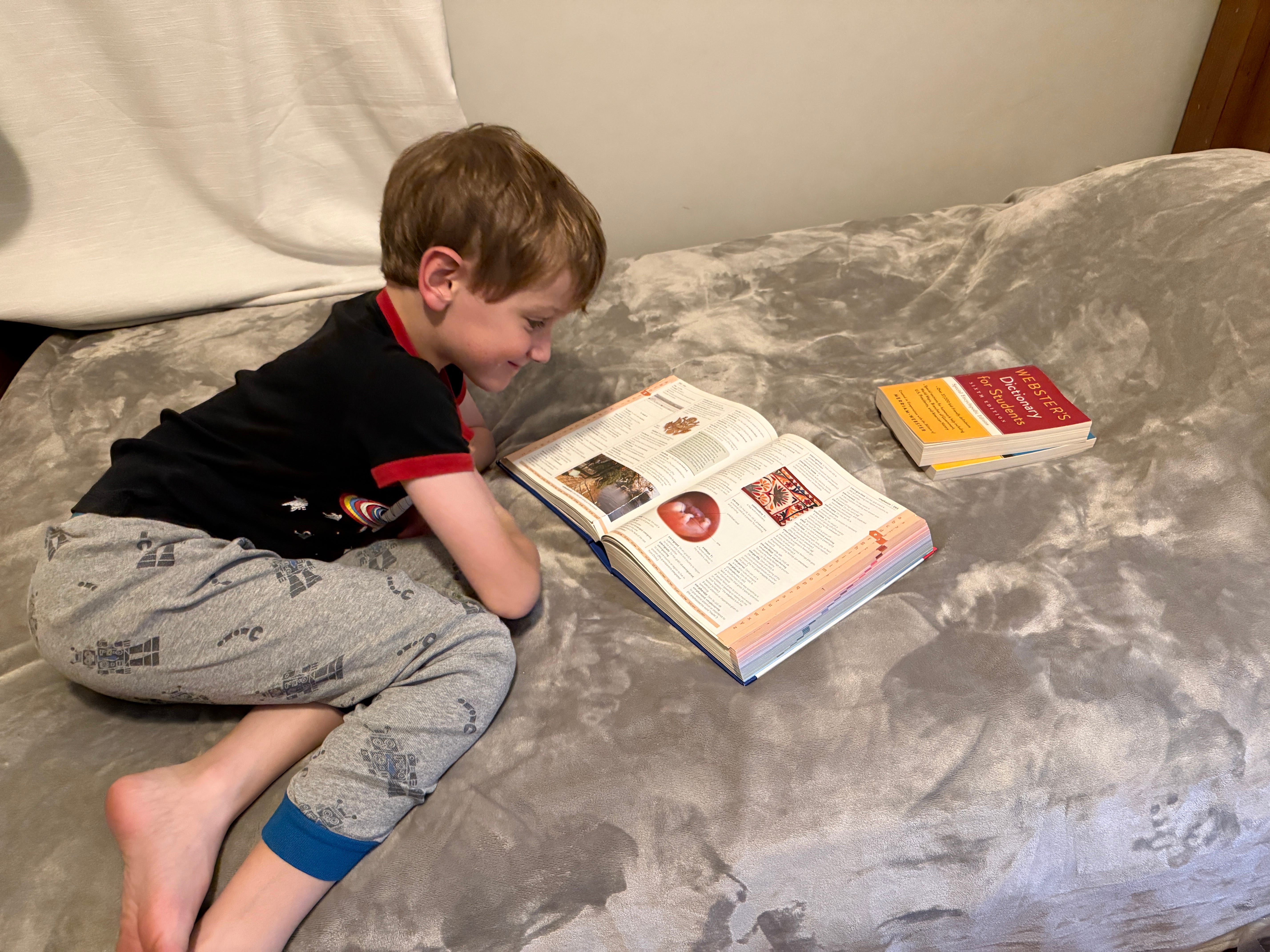
Kids of the Week: he was soooooo excited to get a bigger dictionary:
Our favorite ice cream shop:

I relate to point five—share and then move on. This includes sharing conversations with friends and colleagues or family in person, not just online. I put ideas and thoughts out there because it is part of the broader activity of communicating in the world. This is part of living life. Thanks Dan.
Hi Dan. You nailed it when you wrote, "When you share something and no one seems to care". I had to learn not to take it personally when I thought I was so clever and the world...yawned!
You've helped me understand that my voice matters; not on my schedule, but when the person who needs to hear those words arrives.